In development — not yet available
A robot being built to do the chores, so your parent can stay home.
Merlin is a home-helper robot Sevah is building to tidy up, fetch things, help with laundry, and answer the door — the everyday jobs that quietly decide whether living at home still works. We are targeting a Q1 2027 launch.
Merlin is in development. Create a free account if you want a coordinator to talk through interest, or join the waitlist to hear when it is ready. Nothing is charged on this page.
No public rate card. A coordinator discusses options with you. Prefer to just watch? Join the waitlist instead.
What we are building
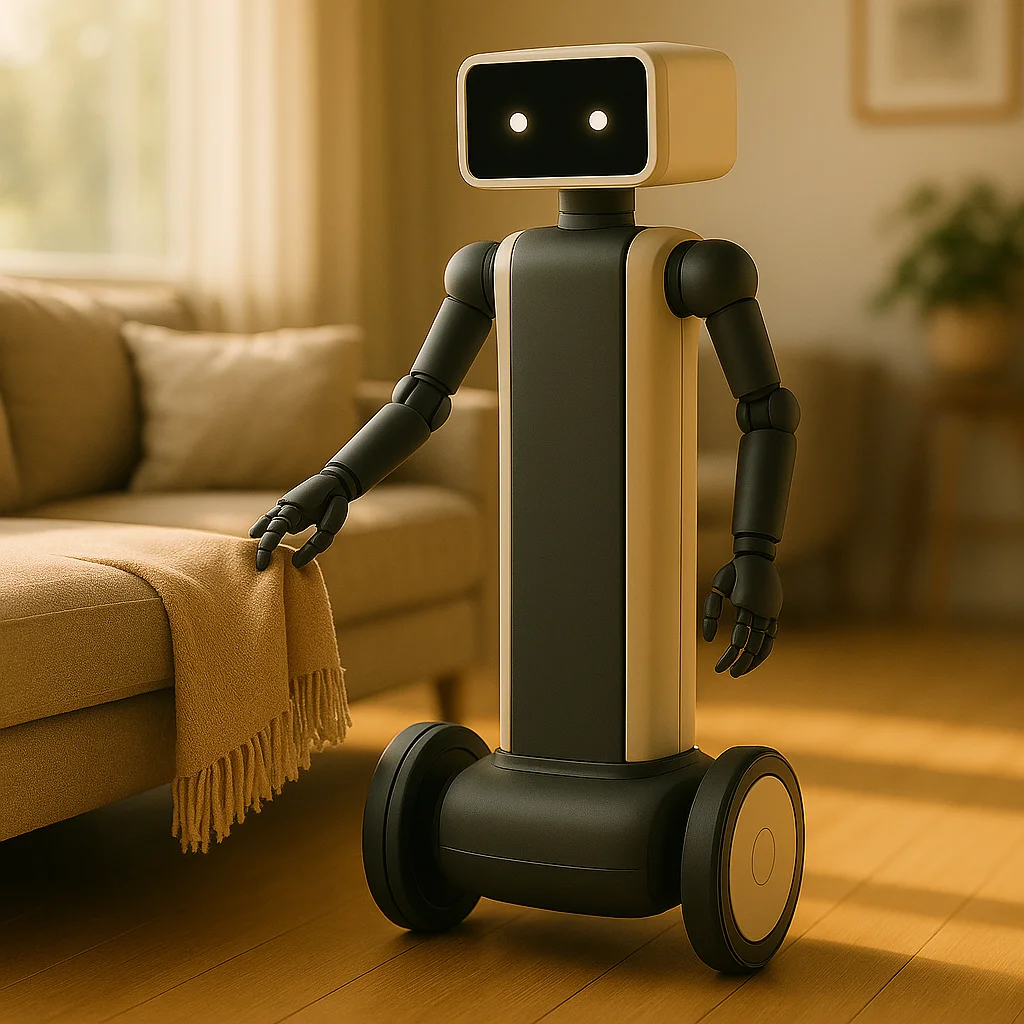
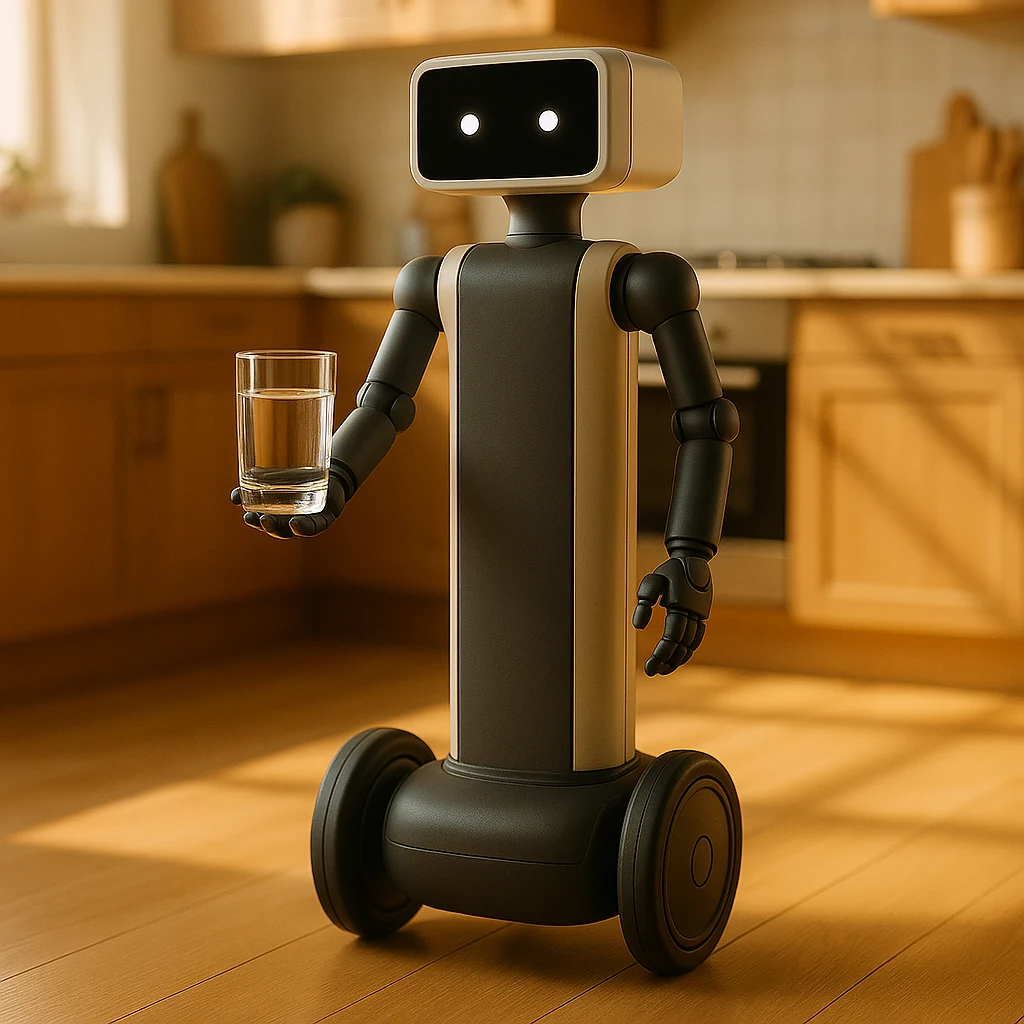
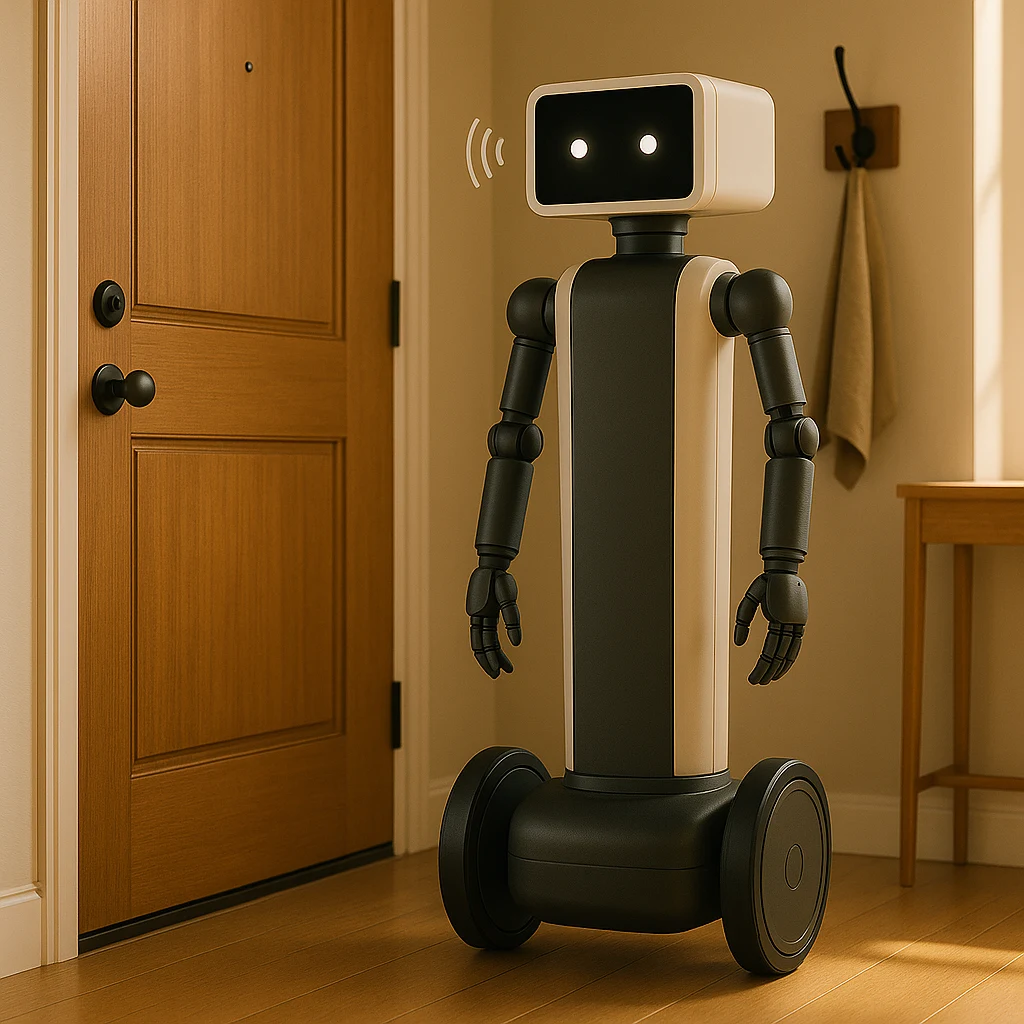
These are concept renders of hardware still in our lab. They show the intent of the design, not a product you can order.
Designed to help with
The jobs that pile up when nobody is there
This is the work Merlin is built for. Tell us which of these matter most in your parent’s home and it shapes what we finish first.
Tidying up
Putting small things back where they belong — mail, books, a cup left on a side table — so a room stays easy and safe to walk through.
Fetching things
Bringing a glass of water, reading glasses, a phone, or a TV remote across the room, so your parent does not have to get up for every small item.
Answering the door
Going to the door, showing your parent who is there, and letting them decide from where they are sitting. It does not open the door.
Laundry help
Sorting a pile and folding light, flat items at a table — the bending and repetition parts of laundry day.
Clearing up after a meal
Carrying light plates, cups, and packaging from the table to the counter or the bin, a few items at a time.
High and low reaching
Getting an item off a high shelf or down near the floor, so nobody climbs on a chair to reach it.
Rubbish, indoors
Picking up litter and dropping it in the kitchen bin.
Small daily rounds
Carrying a light jug to the houseplants indoors, or a scoop to a pet bowl — the small repeating jobs that quietly pile up.
Where it stops
What Merlin will not do
Every machine has an envelope. This is ours, written plainly, so you know exactly what arrives.
It carries light things — a glass of water, the post, a folded towel. Not a full hamper.
It works on one floor. Wheels, not legs, so no stairs.
No cooking and nothing sharp. It does not go near knives, the stove, or anything hot.
No hands-on care. It does not lift, bathe, dress, or steady anyone, and it never touches medication.
A trained person at Sevah is always on the other end. It is not a medical device and it is not left to run the house alone.
One System: Tara Commands, Merlin Executes
Tara acts as the conversational human-machine interface (HMI). Speak to Tara to command robot tasks, coordinate care, and keep everyone connected.
Tara is the Command & Control Interface
Tara serves as the natural human-machine interface (HMI) for the home. Your parent simply speaks to Tara to direct Merlin’s chores (“Tara, have Merlin fetch my glasses”), manage daily routines, and coordinate care workflows — no complex controllers or apps needed.
Merlin is the Hands
Merlin is the mobile physical worker that executes commands received through Tara: tidying rooms, fetching items, carrying laundry, and answering the door safely within defined home envelopes.
CareOS is the Orchestration Layer
CareOS connects Tara, Merlin, and your family into a single unified loop. It ensures all robotic tasks respect safety boundaries, keeps daily context synchronized, and logs completed chores into your family updates.
Where it actually is
The path from lab to living room
We are aiming for a Q1 2027 launch. Hardware in a real home has to be safe and dependable before it earns a schedule, so this is the date we are building against — not a promise we cannot change.
We are here now
Prototype and lab testing
We build and rebuild the hardware in our own lab. Two arms, safe motion, and reliable grasping on real household objects. This is where Merlin is today.
CareOS integration
Merlin learns to take direction through CareOS, the same care-operations layer Tara already uses, so one system understands the whole home.
Safety and privacy review
Independent safety testing, plus consent and privacy rules written with care teams before any robot goes into a home that is not ours.
Supervised home trials
A small number of invited households, with staff support, so we learn what actually helps before we widen access.
General availability
We are targeting Q1 2027. When Merlin is genuinely ready for everyday homes, we start shipping to the families who reserved their spot — and waitlist members hear it first.
Our commitments
Our commitment to your family
Bringing technology into an aging parent’s home requires complete transparency and care. Here is how we protect your trust every step of the way.
Targeting March 2027
We are working toward a Q1 2027 launch. Nothing is guaranteed in hardware, but that is the date we are building against. Create a free account if you want a coordinator to talk through interest. If your plans change, you can ask us to stop following up.
Empowering family & care teams
Merlin takes care of the repetitive physical chores — laundry, fetching items, and tidying up — freeing up valuable time so family and caregivers can focus on meaningful connection.
Safe household assistance
Engineered specifically for everyday home tasks with clear safety boundaries. It is designed to work seamlessly alongside your family’s established routines and existing caregivers.
Rigorous real-world testing
We test every capability in real living environments to ensure reliability, safety, and effortless operation before setting it up in your parent’s home.
Be first to hear when Merlin is ready
Tell us which chores would help your family most. It shapes what we build first, and we email you when there is real news. No payment, no deposit, no commitment — and you can ask us to remove you at any time.
Merlin FAQ
Honest answers about Merlin
Can I buy Merlin today?
Not as a finished product. Merlin is in development. Create a free account or join the waitlist if you want a coordinator to follow up. We do not publish a public rate card.
When will it be available?
We are targeting Q1 2027 — March is the internal target. Hardware timelines are never certain, so this is the date we are building against, not a guarantee. Waitlist members will hear concrete news before anyone else.
What will it cost?
A coordinator discusses options with you. We do not publish a public rate card on this page.
Does Merlin replace a caregiver?
No. It is built for chores, not for people. Judgement, comfort, and the human relationship stay with family and with the caregivers who already help. The goal is to give those people back some of the time chores take.
Will it do personal or hands-on care?
No. Merlin is not designed to lift, bathe, toilet, dress, transfer, or move a person, and it does not give medication. It is not a medical device and it is non-diagnostic. Hands-on care stays with trained humans.
What about privacy inside the house?
The same rules we hold Tara to. Your parent consents first, families receive written updates rather than raw audio or video, there is no continuous recording archive, and one request to Sevah pauses all sharing.
What does joining the waitlist commit me to?
Nothing at all. No payment, no contract, no obligation to buy anything later. You are giving us an email address and, if you want, a note about which chores would help most. You can ask us to remove you at any time.
How will I know when there is news?
We email you. Waitlist members hear about progress, home trials, and availability before anybody else, and we only write when there is something real to say — not on a schedule.
Is there anything from Sevah I can get right now?
Yes. Tara is available today as a month-to-month subscription — Tara in your parent's home with consent-based updates for the family. A care advisor sets it up with you, and nothing is charged on this website.
Ask about Merlin. Get help at home today.
Merlin is still being built. Tara is not — she is available now as a month-to-month subscription, with daily check-in conversation and consent-based updates for your family. A care advisor gets everything set up with you, and nothing is charged on this website.